SYNTECH
    Defence production where every unit can be proven
    All solutions by task
    MILTECH / DEFENCE

    Defence production where every unit can be proven

    One data environment for engineering, the line and finance: specifications, production tasks, warehouse, serial numbers and contract documents — in your perimeter, on Creatio.

    27
    requirements met
    0
    partial
    2
    not met
    29
    business requirements scored
    CONTROL

    You are under scrutiny from four sides at once

    A state contract is not just an order. The customer asks about the delivery date, the military representative needs the test protocol and batch documents, a licence audit checks qualifications, equipment and current documentation, and export raises the end-user and licence question. Syntech Manufacturing keeps the answers where they are created: in receiving, in the operation, in inspection, in the act and in the issue document.

    State contracts and delivery dates

    Defence order code, military unit, representation, stages, delivery schedule, advances and production orders per delivery. A traffic-light board shows plan, forecast and actual, buffer days and the delay reason, and a delivery made late counts as late in on-time statistics.

    Military acceptance

    An act covers a batch, delivery or serial numbers: acceptance type, decision, remarks and a printed form from your own template. A shipment without an accepted act is blocked or flagged, as you set it, and the person who submits an act cannot decide on it.

    NATO codification

    The product card carries NSN, NIIN, NCAGE and supplier/manufacturer codes; the NSN goes onto the label.

    Export control

    Product classification, licences with quantity and value usage, party screening (cleared, under watch, denied), end-use certificates and a check before issue. Denied parties and countries are always blocked; everything else warns or blocks, as you decide.

    Traceability and recall

    From a serial number down to component batches and certificates, and up to the customer, contract and act. Affected items are held or recalled in one action, and every unit has a one-page passport and an as-designed vs as-built comparison.

    Staff reservation and qualifications

    Military-registration data with change history, reservation lists with quota control (50% by default), deferment-expiry warnings 30 days ahead, critical-enterprise decisions, and a qualification matrix checked at operation start.

    Licence-audit evidence

    Equipment with MTBF/MTTR, maintenance and calibration dates, current technical documentation, and an evidence pack built from the product. The pack contains a readiness check, licence scope by product, 17 registers and a cover sheet with a SHA-256 hash, and every pack issued is logged.

    MILTECH / DEFENCE

    What the team sees

    History of every serialized item

    History of every serialized item

    From a serial number down to component batches and supplier certificates; from the serial number up to the customer, contract and act.

    Changes reach the line quickly

    Changes reach the line quickly

    BOM and routing revisions, ECN and current operator instructions do not get lost in email and paper.

    Shipment document packs

    Shipment document packs

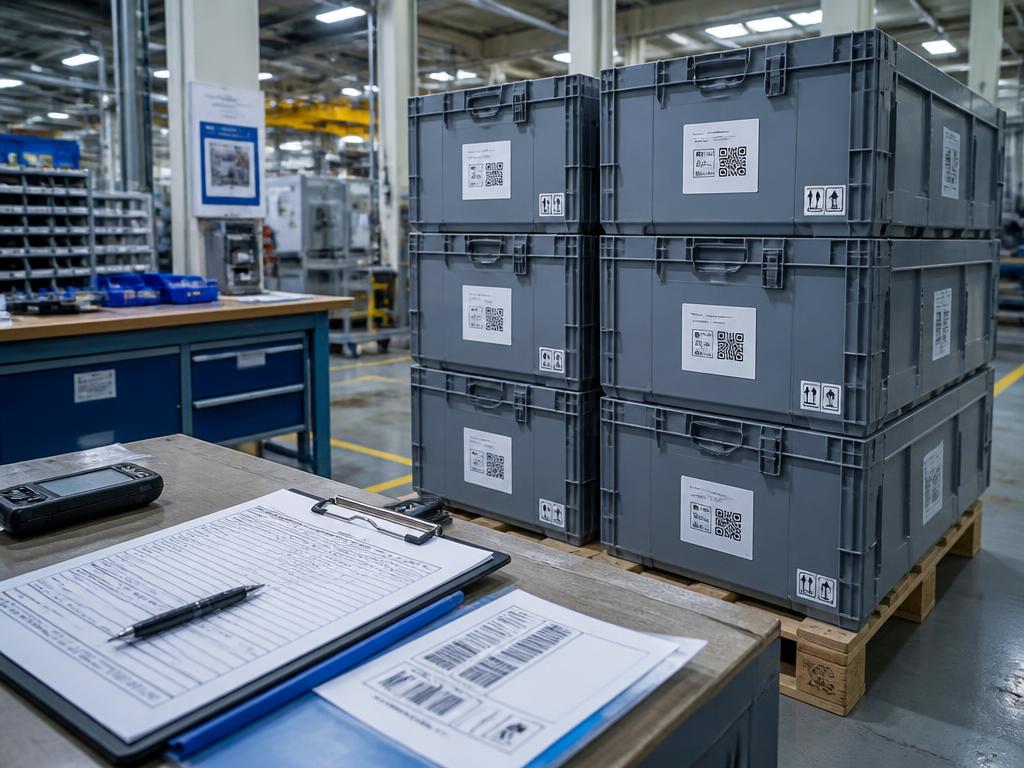
    Test protocols, acceptance acts, certificates, licences and labels are linked to the batch or serial number. A shipment without an accepted act is blocked or flagged, as you set it.

    Inside your perimeter

    Inside your perimeter

    On-premise or private cloud, roles, SSO, 2FA, change logs and isolation by contract or project.

    27 / 29

    The requirement matrix: what is met and what is not

    We scored version 2.0.0 against the Ukrainian defence-manufacturing requirement matrix. Of 37 functions, eight are platform-level (record-level rights, audit logs, backup and isolated deployment) and come from Creatio. Of 29 business requirements, 27 are met and 2 are not met. In autumn 2026 the licence-audit evidence pack and product configuration management (variants, approved substitutes and an as-designed vs as-built comparison) moved from partial to met.

    27
    requirements met
    0
    partial
    2
    not met
    HONEST LIMITS

    What we do not do

    You should see this list in the first week, not during acceptance.

    • No register of state-secret clearances.
    • No integration with DOT-Chain Defence or another defence marketplace.
    • No bundled qualified e-signature provider; there is a connection point for an external provider.
    • End-user screening is manual; the system keeps the audit trail.
    • Financial accounting stays in an external accounting system.
    • Checks warn by default. Denied parties are always blocked, but the licence, certificate, acceptance act, qualification and equipment checks only warn until your administrator switches them to block.

    Platform certificates are evidence, not automatic compliance

    Creatio has ISO/IEC 27001:2022, ISO 9001:2015, SOC 2 Type II and ISO/IEC 27017/27018 for the relevant scopes. But your system’s compliance is assessed by the system owner after deployment and configuration.

    Where it runs and who controls it

    In your perimeter

    On-premise or private cloud. The manufacturing contour runs without an external service.

    Roles, rights and audit

    Record- and column-level rights, change logs, SSO and 2FA come from the platform. The product adds 15 functional roles, from planner and QC inspector to military representative and export-control officer. It also enforces two-person rules: the author of a purchase request, shift assignment, non-conformance decision or acceptance act cannot approve it. Record-level rights for sensitive data (payroll and rates, military registration, licences, acceptance acts) are configured for you as part of the implementation project.

    Isolation by contract

    Access to a contract, order or product is controlled by roles, so a neighbouring project stays invisible to teams that do not need it.

    Production planning and control

    Production, material and capacity planning

    Planning in SYNTECH Manufacturing on Creatio: demand forecasts, BOM-based MRP, materials, work-centre capacity and Gantt scheduling.

    Read more

    Built-in QMS quality control in MES

    QMS in SYNTECH Manufacturing: incoming, in-process and final inspection, inspection criteria, non-conformances, quarantine, CAPA and 8D.

    Read more
    Product site

    Detailed capabilities live on the product site

    SYNTECH Manufacturing has a dedicated product site — syntechmanufacturing.com — with detailed capabilities, defence traceability and releases. Here we sell the app on the Creatio Marketplace and provide implementation and support.

    From $600 per user per year (USD), licensed through the Creatio Marketplace.

    syntechmanufacturing.com

    SYNTECH Manufacturing FAQ

    How are BOMs, routings and product revisions managed?

    A BOM records components, quantities, units and operation numbers; subassemblies have their own BOMs. Routings define ordered operations, work centres, setup/run time and inspection criteria. A new revision copies the current one into Draft; lines cannot be edited after leaving Draft. An ECN records the reason, effective date and applicable-from serial number, with chief-technologist approval. Revisions can be compared; release leaves exactly one current revision and marks the previous one Superseded. Open orders keep their revision, so changes are not retroactive.

    Can CAD/PDM BOMs be imported without immediate release?

    Yes. The import wizard supports CSV, TSV, TXT, Excel, XML from SOLIDWORKS PDM or Autodesk Inventor, and JSON. It provides column mapping, product matching and a diff preview before writing. Confirmation creates Draft revisions only, followed by separate approval and release.

    Who is responsible for on-premise MES infrastructure and backups?

    SYNTECH Manufacturing is an application for Creatio 8.x, available on-premise or in a private cloud. For on-premise, the customer is responsible for servers, network, operating system, database, backups, access, monitoring and incident response. SLA, RPO and RTO follow the customer's own regulations; Creatio Cloud metrics do not automatically apply to on-premise. Cloud platform certificates do not certify the customer's infrastructure.

    Which ERP and accounting systems does SYNTECH Manufacturing integrate with?

    We deliver integration with 1C, BAS, SAP and other ERP or accounting systems as a project service, scoped to the system and its version. The product itself has no ready-made connectors.

    Does it scale for large manufacturers?

    Yes. The largest live Creatio installation supported by SYNTECH serves more than 5,000 users.

    Are we dependent on a third-party platform (Creatio)?

    Your data stays with you. On-premise deployment on your own infrastructure is available. Platform licensing and guarantees are provided by the vendor, Creatio.

    How mature is the product?

    SYNTECH Manufacturing is an application for Creatio 8.x; the current version is 2.0.0. The autumn 2026 update added around 35 new components. Before release it passed two full user acceptance cycles, 389 and 483 business scenarios including non-administrator roles, with no regressions.

    Can shipment be held until military acceptance?

    Yes. An acceptance act is created for a batch, delivery or serial numbers. A shipment without an accepted act is blocked or flagged, as you set it; the default is a warning. The person who submits the act cannot take the decision on it. Acts, test protocols and unit passports print from your own templates.

    What is in the licence-audit evidence pack?

    A readiness check, the licence scope by product, 17 registers (qualifications, equipment with maintenance and calibration, current revisions, non-conformances and CAPA, acceptance acts and more) and a cover sheet with a SHA-256 hash of the contents. Every pack issued is logged and can be downloaded again.

    How does staff reservation work?

    Each employee has a military-registration tab with change history. Reservation lists are built from candidates with quota control (50% by default). Deferments trigger a warning 30 days before they expire, and critical-enterprise decisions are stored with the lists. The system keeps the records and the history; the decisions stay with your HR team.


    Test us on a contract of your own

    Bring your state contract and one serial number. In the demo we take them from the delivery schedule to the acceptance act, the licence check and the audit evidence pack, and show the two requirements the product does not cover.