
 CRM
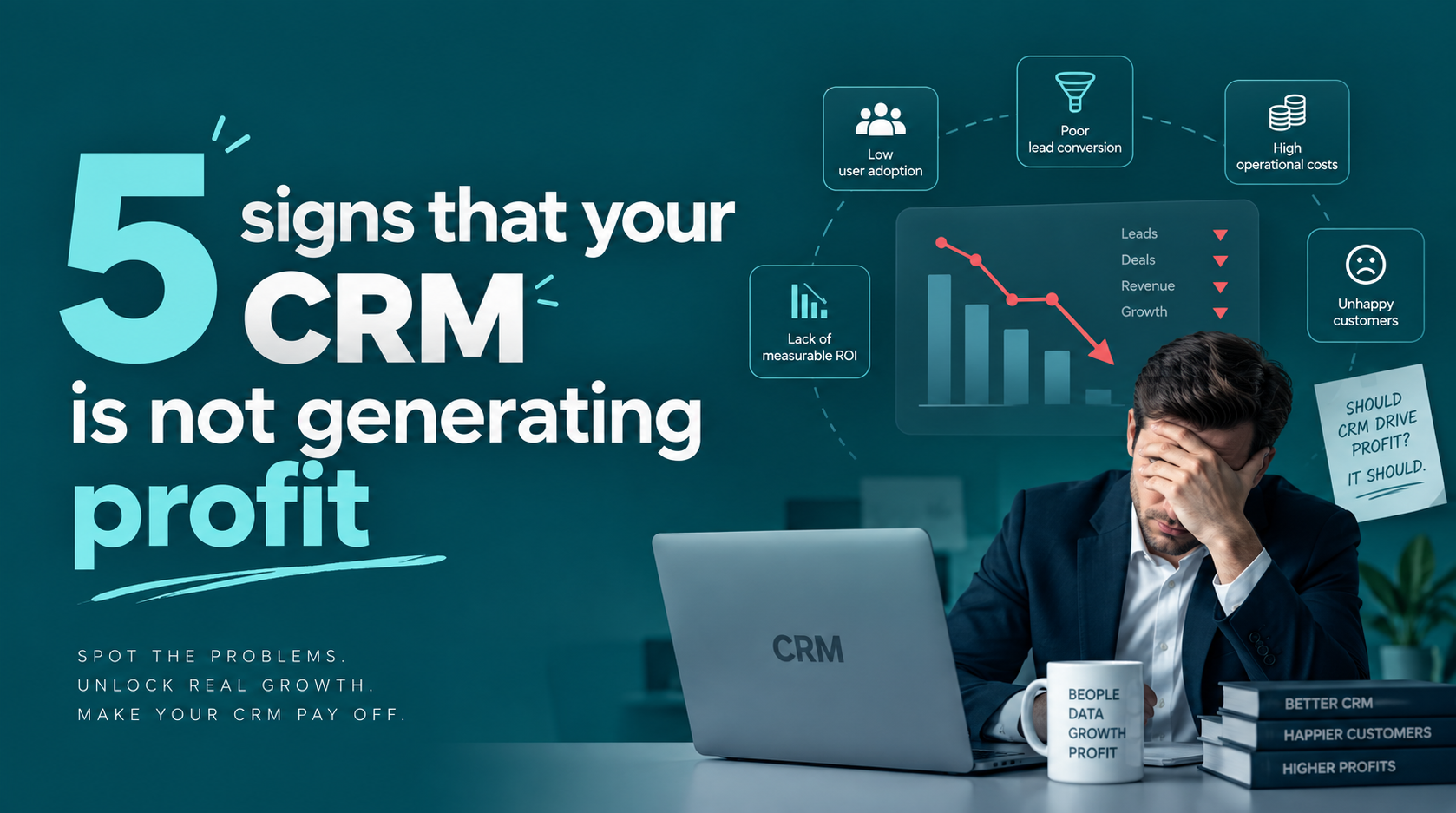
CRM5 signs that your CRM is not generating profit
A properly implemented CRM remains one of the most effective tools for business growth. According to research, a high-quality system can return $3 to $5 for every dollar invested, and in the best cases, significantly more.
Sales & CRM automation
Pipeline, customers, operations and analytics driven by processes, not spreadsheets.
However, in practice, a significant portion of implementations do not achieve the planned results. According to estimates for 2025-2026, 30 to 55% of CRM projects fail to meet initial business goals. The reason rarely lies in the platform itself. Most often, the system simply doesn't work as it should.
Here are five clear signs that your CRM is currently not generating profit.
1. Data in the system is incomplete, outdated, or duplicated
Data quality remains the main obstacle. 70-76% of CRM users report that less than half of their data is accurate and complete. Contacts change positions, companies reorganize, phone numbers and emails become outdated at a rate of 20-30% per year.
When the system has many duplicates, empty fields, and irrelevant information, reports, lead scoring, and even AI recommendations lose value. Teams stop trusting the data and return to Excel. Without a clean database, no CRM can generate profit.
2. The team uses the system partially or formally
Low adoption rate is one of the most common reasons for failure (about 43% of cases). If salespeople enter data only "for show", managers don't see the real picture of the funnel, and activity is recorded only at 30-50%, the system becomes a costly element.
In 2026, as CRM is increasingly supplemented with AI functions, low engagement makes these capabilities almost useless. The model works with what it has, not with what it should have.
3. Processes are not automated, manual work remains
CRM should reduce routine: automatic follow-ups, lead routing, updating deal statuses, reminders. If employees still manually copy data between systems, create reports in spreadsheets, and track deadlines in calendars – the investment is not working.
The average salesperson spends only about 40% of their time on direct sales. Without automation, CRM turns into an electronic journal, not a tool for accelerating deals.
4. There is no clear link between CRM and financial results
If management cannot answer simple questions - by what percentage did conversion increase, how did the deal cycle change, what share of revenue is directly related to work in the system - measuring profit is impossible.
Without basic metrics before implementation and regular monitoring afterwards, any claims of "success" remain subjective.
5. The system exists separately from other business processes
Lack of integrations with accounting, ERP, marketing tools, telephony, or warehouse systems creates information gaps. Data is duplicated, reports contradict each other, forecasting loses accuracy.
In 2026, CRM is increasingly perceived not as a separate contact database, but as a central part of the digital ecosystem. If it does not exchange data in real-time, its impact on profit remains limited.
If you recognize one or more of these signs, it's not a signal that CRM as a tool doesn't work. It's a signal that the system needs proper setup, data cleansing, process automation, and deep integration with the business.
This is what Syntech Digital does. We implement Creatio and develop our own applications for this platform so that CRM genuinely impacts revenue, reduces operating costs, and provides transparent analytics to management.
Ready to check how effectively your current system works? Write to us – we will conduct an audit and show concrete steps that will help turn CRM into a profit tool.
Next step
Get a 30-minute automation assessment
15–30 minutes, no slide decks: we show the solution on your data and tell you if it fits.